


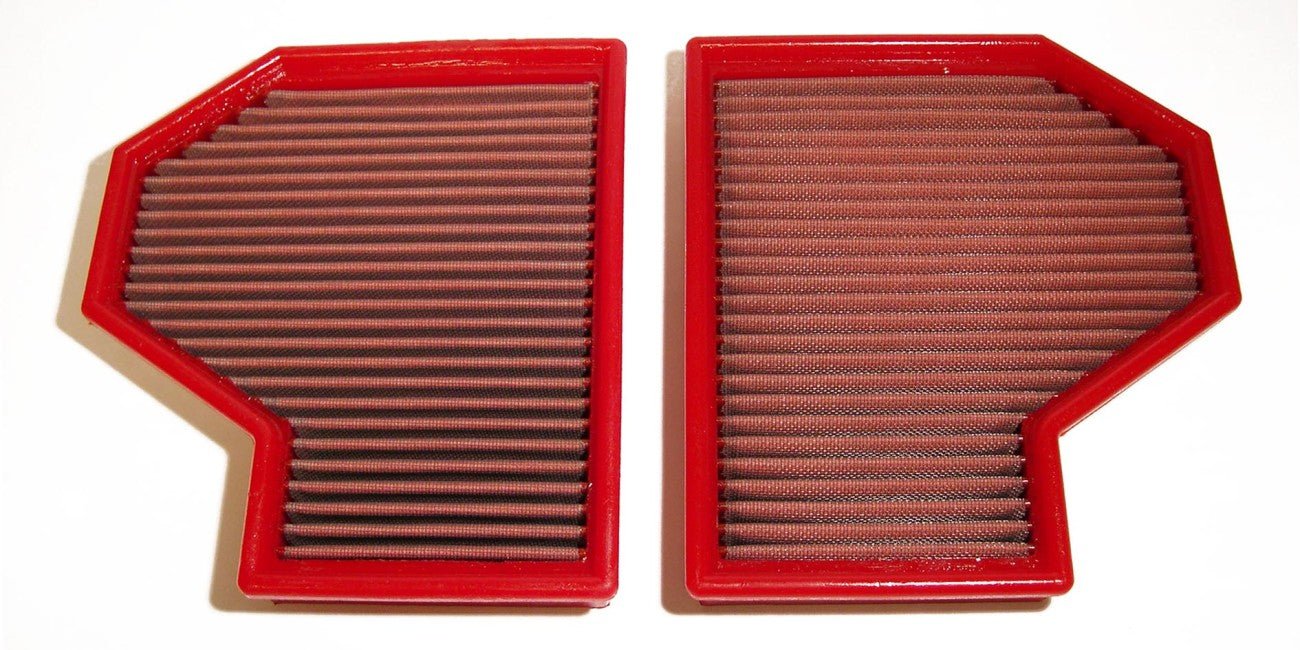
BMC air filters are washable, reusable filtration products made for cars, motorcycles, and specific air-intake systems. Most BMC replacement filters install inside the original factory airbox in place of the disposable paper element. Their construction combines layered cotton gauze, low-viscosity filter oil, protective mesh, and an application-specific molded surround.
The most important distinction is simple: a replacement air filter is not the same thing as a complete intake system, and it does not guarantee a specific horsepower, torque, or fuel-economy increase. Its practical value is reusable construction, precise fitment, and an airflow-and-filtration design intended for the correct factory airbox.
If you are ready to buy, shop BMC air filters from European Performance Filters. If you are still researching, this guide explains how BMC filters are constructed, how oiled-cotton filtration works, which filter types are available, and what to check before ordering.
Quick Answer: What Is a BMC Air Filter?
A BMC replacement air filter is a vehicle-specific, washable filter designed to replace the original paper filter in a compatible factory airbox. New BMC filters arrive pre-oiled and ready for installation. When the filter becomes dirty, it can be cleaned, allowed to air dry, and re-oiled with the correct BMC regeneration products.
- Filtering media: Multi-layer cotton gauze treated with low-viscosity oil
- Support structure: Epoxy-coated alloy mesh
- Common use: Application-specific replacement for the factory air filter
- Service: Washable and reusable when maintained correctly
- Fitment: Must be confirmed by BMC part number, vehicle details, and airbox configuration
How BMC Air Filters Are Constructed
BMC replacement filters are built differently from conventional disposable paper filters. Each part of the assembly has a specific job.
Layered Cotton Gauze
The filtering element uses multiple layers of cotton gauze. The open structure of the cotton provides a path for incoming air while giving the filter oil and cotton fibers a large surface area for retaining airborne contamination.
Low-Viscosity Filter Oil
The cotton is treated with a dedicated low-viscosity oil. As air passes through the media, particles are intercepted by the cotton fibers and retained by the oil. Because the oil is part of the filtration system, a cleaned filter must be re-oiled correctly before it is returned to service.
Protective Alloy Mesh
The cotton media is supported by alloy mesh coated with epoxy resin. The mesh helps the filter maintain its intended shape, while the coating protects the metal from oxidation associated with moisture and fuel vapors in the intake environment.
Molded Filter Surround
The red molded surround supports the filtering element and seals against the compatible airbox. Correct fitment matters: a high-quality filter installed in the wrong airbox cannot provide the intended seal or filtration path.
For a deeper technical explanation, visit the EPF filtration technology guide.
How Oiled-Cotton Filtration Works
Oiled-cotton filtration relies on both interception and retention. Larger particles are intercepted by the structure of the filtering media. Smaller particles that contact the cotton fibers are retained by the filter oil. This allows the filter to remain serviceable while supporting airflow through the media.
The oil must be applied in the correct amount. Too little can reduce the media's ability to retain contamination. Too much can migrate from the filter and may create problems near an airflow sensor. That is why EPF recommends using the proper BMC cleaning and re-oiling kit instead of household cleaners or unrelated filter oils.
Types of BMC Air Filters and Intake Products
“BMC air filter” can describe several different product categories. Understanding the difference prevents the common mistake of treating every filter or intake as the same kind of upgrade.
| Product Type | Where It Installs | Important Consideration |
|---|---|---|
| Replacement panel or cylindrical filter | Inside the compatible original airbox | Confirm the exact BMC part number, engine, model year, and airbox |
| Motorcycle replacement filter | Inside the compatible motorcycle airbox | Standard and race versions are not interchangeable for every use |
| Universal conical filter | Part of a custom or direct-induction installation | Requires correct dimensions, heat management, support, and professional installation planning |
| CDA, OTA, or DIA intake system | Replaces or modifies more of the factory intake tract | This is a complete intake-system decision, not a simple replacement-filter swap |
| CRF or other specialized racing filter | Specific road, supercar, motorcycle, or competition applications | Exact application, vehicle configuration, and intended use must be verified |
Browse BMC car air filters, BMC motorcycle air filters, or BMC CDA intake systems by product type.
Replacement Air Filter vs. Complete Intake System
A BMC replacement filter retains the compatible factory airbox and replaces only the original filter element. This is usually the most straightforward option for a stock or lightly modified vehicle because the airbox, intake routing, sensors, and mounting arrangement remain in place.
A complete intake system changes more of the airflow path. Depending on the system, it may replace the airbox, alter intake routing, change the location of the filtering element, or require additional installation and calibration considerations. Performance claims made for a complete intake system should not automatically be applied to a replacement filter.
Do BMC Air Filters Increase Horsepower?
A compatible BMC replacement filter can support airflow through the original airbox, but it does not guarantee a specific horsepower or torque increase. The result on any vehicle depends on the restriction of the original filter, engine design, airbox, engine-management strategy, existing modifications, environmental conditions, and the way the vehicle is tested.
That means a replacement filter should not be advertised as an automatic horsepower upgrade. Its defensible benefits are reusable construction, application-specific fitment, and an airflow-oriented filter design that remains serviceable when maintained correctly.
For a fuller explanation, read Do Performance Air Filters Increase Horsepower?
Does a BMC Replacement Filter Require Tuning?
A standard BMC replacement filter installed in the correct factory airbox typically does not require ECU tuning. The original airbox, sensor placement, and intake routing remain in use.
That answer can change with race filters, universal conical filters, complete intake systems, modified airboxes, larger airflow changes, or other engine modifications. Those applications should be evaluated individually, and professional calibration may be appropriate when the vehicle configuration extends beyond a normal replacement-filter installation.
How to Confirm the Correct BMC Filter
Do not order from the vehicle name alone. Engines, model years, production splits, markets, trims, and airbox revisions can change the correct filter even within the same model family.
- Confirm the complete year, make, model, trim, and engine.
- Confirm the market or country specification when applications differ by region.
- Check the BMC part number against the exact application listing.
- Compare available OEM air-filter cross references.
- Verify whether the listing includes one filter, a complete pair, or a filter sold individually when two are required.
- Check for a modified airbox, aftermarket intake components, or a production split.
- Contact EPF before ordering if any detail is uncertain.
European Performance Filters can help verify fitment using your vehicle information. Contact EPF for fitment support before placing the order if you are unsure.
Installing a BMC Replacement Filter
A replacement filter installs in the compatible factory airbox in place of the original element. The airbox should be clean, the filter must sit evenly in its intended location, and the airbox cover must close without forcing or deforming the seal.
Installation difficulty varies significantly by vehicle. Some airboxes are accessible in minutes; others require removal of trim, intake ducts, covers, or additional hardware. Follow the vehicle-specific service information and the instructions supplied with the filter. See the EPF installation guide for additional guidance.
Cleaning and Re-Oiling a BMC Air Filter
BMC recommends filter regeneration at roughly 20,000 to 25,000 kilometers as a general guideline. That is approximately 12,000 to 15,500 miles, but it is not a fixed interval. Dust, sand, off-road use, competition, climate, and other operating conditions can require earlier inspection and service.
- Remove the filter carefully and clean loose debris from the surrounding airbox.
- Apply the approved BMC detergent and allow it to work according to the product instructions.
- Rinse the filtering element gently until contamination and old oil have been removed.
- Allow the filter to air dry completely away from direct sunlight and heat.
- Apply the correct BMC filter oil evenly and allow it to absorb into the media.
- Remove any excess oil from the molded surround or support mesh before reinstalling the filter.
Do not reinstall a damp filter, use compressed air to force-dry the media, substitute an unrelated oil, or over-oil the filter. Follow the complete BMC air filter cleaning guide before servicing the filter.
Reusable does not mean maintenance-free or indestructible. Replace the filter if the filtering media, molded seal, or support structure is damaged, permanently contaminated, or no longer seals correctly.
BMC Oiled-Cotton Filter vs. Disposable Paper Filter
| Feature | BMC Oiled-Cotton Replacement Filter | Typical Disposable Paper Filter |
|---|---|---|
| Service method | Clean, air dry, and re-oil when serviceable | Replace when dirty or at the specified interval |
| Filtering media | Layered cotton gauze treated with filter oil | Pleated paper or other disposable media |
| Original airbox use | Yes, when the exact replacement application is specified | Yes, when the correct OEM-style filter is specified |
| Ongoing maintenance | Requires correct cleaning and oil application | Requires periodic replacement |
| Fitment requirement | Application-specific | Application-specific |
Neither construction type eliminates the need for correct fitment, airbox sealing, and regular inspection. The better choice depends on the vehicle, service preferences, operating environment, and the exact filter application.
Shop BMC Filters and Get Fitment Support
European Performance Filters supplies genuine BMC filtration products for European performance cars, motorcycles, specialty applications, and compatible intake systems.
- Shop BMC Car Air Filters
- Shop BMC Motorcycle Air Filters
- Shop the BMC Cleaning Kit
- Read the BMC Air Filter FAQ
- Contact EPF for Fitment Help
BMC Air Filter FAQ
What are BMC air filters made of?
BMC replacement filters use multiple layers of cotton gauze treated with low-viscosity oil and supported by epoxy-coated alloy mesh. The filter surround is molded to match the intended airbox application.
Are BMC air filters washable and reusable?
Yes. BMC filters are designed to be cleaned, allowed to air dry, and re-oiled with the proper BMC regeneration products. Cleaning frequency depends on mileage, climate, dust, and driving conditions.
Do BMC air filters increase horsepower?
A compatible BMC replacement filter can support airflow through the original airbox, but it does not guarantee a specific horsepower or torque increase. Results depend on the vehicle, existing restriction, engine management, modifications, and test conditions.
Do I need a tune after installing a BMC air filter?
A standard replacement filter installed in the correct factory airbox typically does not require tuning. A full intake system, race filter, modified airbox, or other engine modifications may require additional calibration or professional evaluation.
How often should I clean a BMC air filter?
BMC recommends regeneration at roughly 20,000 to 25,000 kilometers as a general guideline, but the correct interval varies with driving conditions. Inspect the filter sooner in dusty, sandy, off-road, or competition environments.
How do I know which BMC air filter fits my vehicle?
Confirm the BMC part number against your exact year, make, model, engine, market, and airbox configuration. Check available OEM cross references and package quantity, and contact European Performance Filters before ordering if anything is uncertain.

Leave a comment
This site is protected by hCaptcha and the hCaptcha Privacy Policy and Terms of Service apply.