

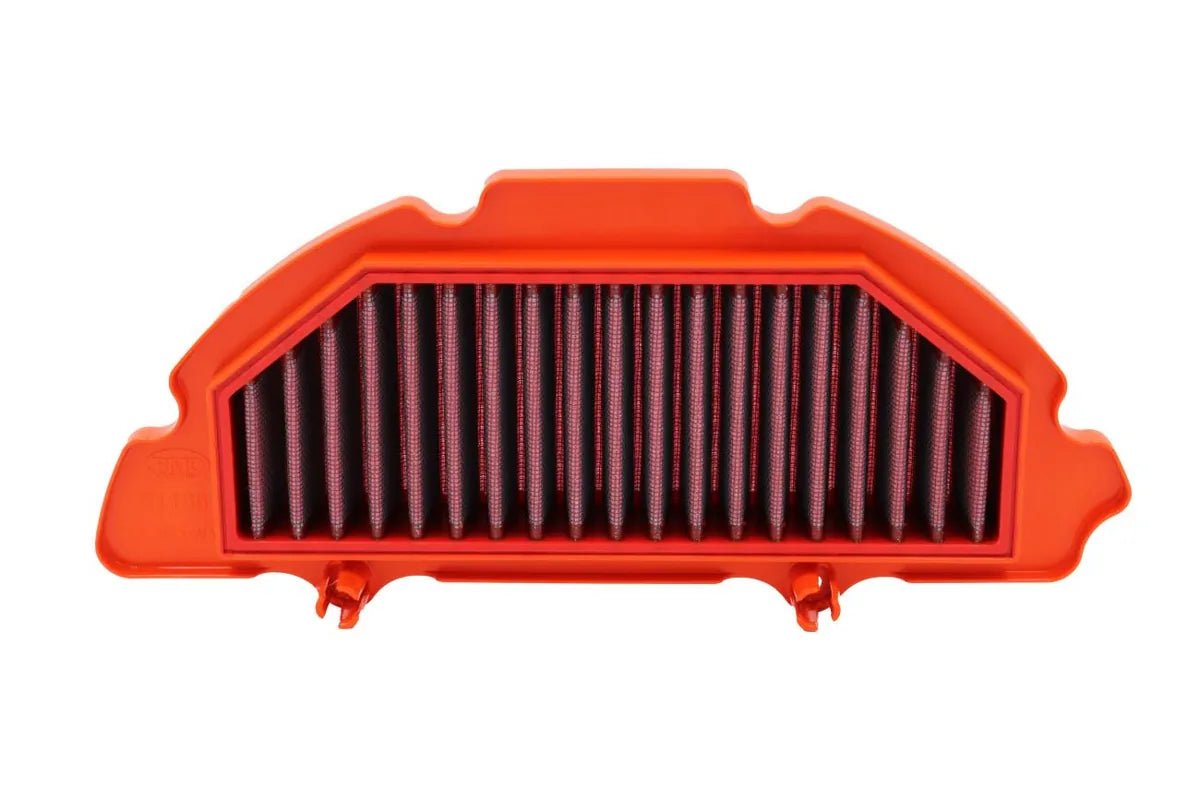
A motorcycle air filter removes dust and other contaminants from the air entering the engine. Choosing the right one means matching your bike's fitment, riding conditions and maintenance requirements—not simply buying the filter with the biggest airflow claim.
This guide explains how motorcycle air filters work, compares paper, cotton gauze and foam designs, and covers what to consider before upgrading. If you already know your application, browse our BMC motorcycle air filter collection and confirm the year, model and engine details on the product page.
What is an Air Filter?
The air filter is a replaceable or serviceable element in the motorcycle's intake system, usually inside an airbox. Air passes through the element before reaching the engine. Its job is to capture contaminants while allowing the engine to draw the air it needs.
Most road motorcycles have an air filter, although its location and shape differ by model. Some sit beneath the fuel tank; others are accessed through a side panel or another cover. Check the owner's or workshop manual before removing bodywork or opening the intake.
Why Are Air Filters Important for Motorcycles?
The filter helps protect the engine from abrasive particles. A good seal around the element matters as much as the material itself: a gap can let air bypass the filter entirely. The airbox, element and retaining hardware need to work together.
As a filter becomes heavily loaded with dirt, intake restriction can increase and limit performance. Servicing it correctly helps maintain the intake system's intended operation. That does not mean fitting an aftermarket element will automatically increase horsepower or fuel economy. Those results depend on the bike and require application-specific evidence.
How Do Air Filters Work?
The engine draws air through the intake and across a porous filtering medium. Particles are captured as the air moves through that medium. Pleats increase the filtering area available within a compact airbox; different materials and designs balance airflow, particle capture and dirt capacity differently.
A larger opening or a less restrictive filter is not, by itself, proof of a better filter. Filtration performance, sealing and compatibility still matter. For more detail on evaluating claims, see our air filter testing guide.
Types of Motorcycle Air Filters
Paper, cotton gauze and foam are common filter materials. Choose a design approved for your motorcycle and intended use, rather than treating these materials as interchangeable.
| Filter type | Typical service approach | Main consideration |
|---|---|---|
| Disposable paper | Replace according to the motorcycle's schedule and filter condition | Simple servicing without washing or re-oiling |
| Reusable oiled cotton gauze | Wash, dry and re-oil with the specified products | Reusable construction with a defined maintenance process |
| Serviceable foam | Follow the filter maker's cleaning and oiling instructions | Common in off-road applications; frequent inspection in dust |
1. Paper Air Filters
Many factory filters use disposable pleated paper media. They offer straightforward maintenance: fit the correct replacement when service is due. Do not wash a disposable paper element or assume it can be restored using the same process as a reusable filter.
This can be a convenient choice for riders who prefer replacement servicing. Follow the motorcycle manufacturer's schedule, including any guidance for dusty use.
2. Cotton Gauze Air Filters
BMC replacement filters use oiled cotton gauze supported by mesh. A correctly matched replacement element fits the original airbox, and the reusable construction allows cleaning and re-oiling instead of routine disposal.
The tradeoff is maintenance time and attention. Use the correct detergent and oil, allow complete drying, and inspect the element and seal. Reusability does not make a torn or poorly sealing filter suitable for continued use.
3. Foam Air Filters
Foam filters are common on dirt bikes and other off-road motorcycles. Serviceable designs typically need cleaning and the appropriate foam-filter oil. Their suitability depends on the filter's construction and the motorcycle's intake, rather than foam being universally better for every bike.
Use the maker's approved service products. Cotton-filter oil and foam-filter oil should not be treated as interchangeable.
Air Filter Maintenance
How Often to Clean and Replace Air Filters
There is no single mileage interval for every motorcycle filter. Start with your motorcycle manual and the filter manufacturer's guidance, then account for dust exposure and the element's condition. An off-road ride can justify an inspection much sooner than normal road mileage suggests.
For interval guidance and when a reusable element actually needs replacement, read how often to clean or replace a motorcycle air filter. A reusable filter does not require automatic replacement at an arbitrary 50,000-mile mark.
Cleaning Procedures for Different Filter Types
Disposable paper elements are replaced. Reusable cotton and foam elements are serviced according to their own instructions. For BMC cotton filters, use the specified cleaner, rinse gently, allow full air drying and reapply BMC oil as directed. Do not squeeze or wring the cotton element.
Our BMC cleaning and recharging guide covers the process in detail. Always follow the instructions for the particular kit and filter you have.
Tips for Effective Cleaning
- Inspect the filtering medium, supporting mesh and sealing surface during service.
- Keep dirt out of the open intake while the filter is removed.
- Avoid compressed air, pressure washing and added heat on BMC cotton elements.
- Allow the filter to dry fully and use the specified oil quantity and application method.
- Install a new pre-oiled BMC replacement filter as supplied; it does not need an extra coat of oil.
Signs of a Dirty Air Filter
Visible debris loading, overdue servicing or an unknown service history are reasons to inspect the filter. Reduced power or sluggish response can also justify checking the intake, but those symptoms have other possible causes. Starting trouble or a change in fuel consumption is not enough to diagnose a filter problem.
Look for damage as well as dirt. Torn media, a distorted sealing surface or signs of dirt bypass require attention. Cleaning cannot repair a damaged element or compensate for incorrect fitment.
Upgrading to High-Performance Air Filters
Benefits of High-Performance Filters
A reusable replacement filter can appeal to riders who want to retain the factory airbox and service the element over time. Long-term value depends on the purchase price, service supplies and how long you keep the bike. Any measurable performance gain depends on the application; avoid assuming a fixed horsepower increase or fuel saving.
Factors to Consider When Choosing a Filter
- Exact fitment: Check make, model, model year, engine and the manufacturer's part number.
- Intended use: Distinguish a standard replacement from a race-designated filter or complete intake system.
- Maintenance: Choose a service approach you are prepared to follow.
- Riding conditions: Consider road, track and dust exposure when planning inspections.
Do not assume a filter requires no tuning simply because it fits. Follow the filter and motorcycle manufacturer's instructions, especially with race elements, intake modifications or exhaust changes.
Installation Tips
Work with the engine cold and follow the bike's access procedure. Compare the new element with the specified application, clean the airbox carefully and seat the filter evenly. Refit the retainers and close the airbox without trapping or distorting the seal. The filter should not be forced into place.
Conclusion
The right motorcycle air filter combines accurate fitment, effective sealing and a service routine suited to your riding. Paper offers simple replacement servicing; reusable cotton and foam designs need their own cleaning and oiling procedures.
Ready to find a replacement? Explore BMC motorcycle air filters and check the application details before ordering. If you are unsure, contact European Performance Filters with your motorcycle's make, model and year so we can help confirm the part.


Leave a comment
This site is protected by hCaptcha and the hCaptcha Privacy Policy and Terms of Service apply.