

Summary: On modern European vehicles, especially turbocharged platforms from BMW, Audi, Mercedes-AMG, and Porsche, airflow efficiency directly impacts fuel consumption. A high-quality performance drop-in filter—like one from BMC—can help reduce restriction, improve volumetric efficiency, and boost real-world MPG in steady-state driving conditions. This article breaks down how and why those benefits are possible, with data-backed insights and real-world scenarios.
How Does a Performance Filter Affect Fuel Economy?
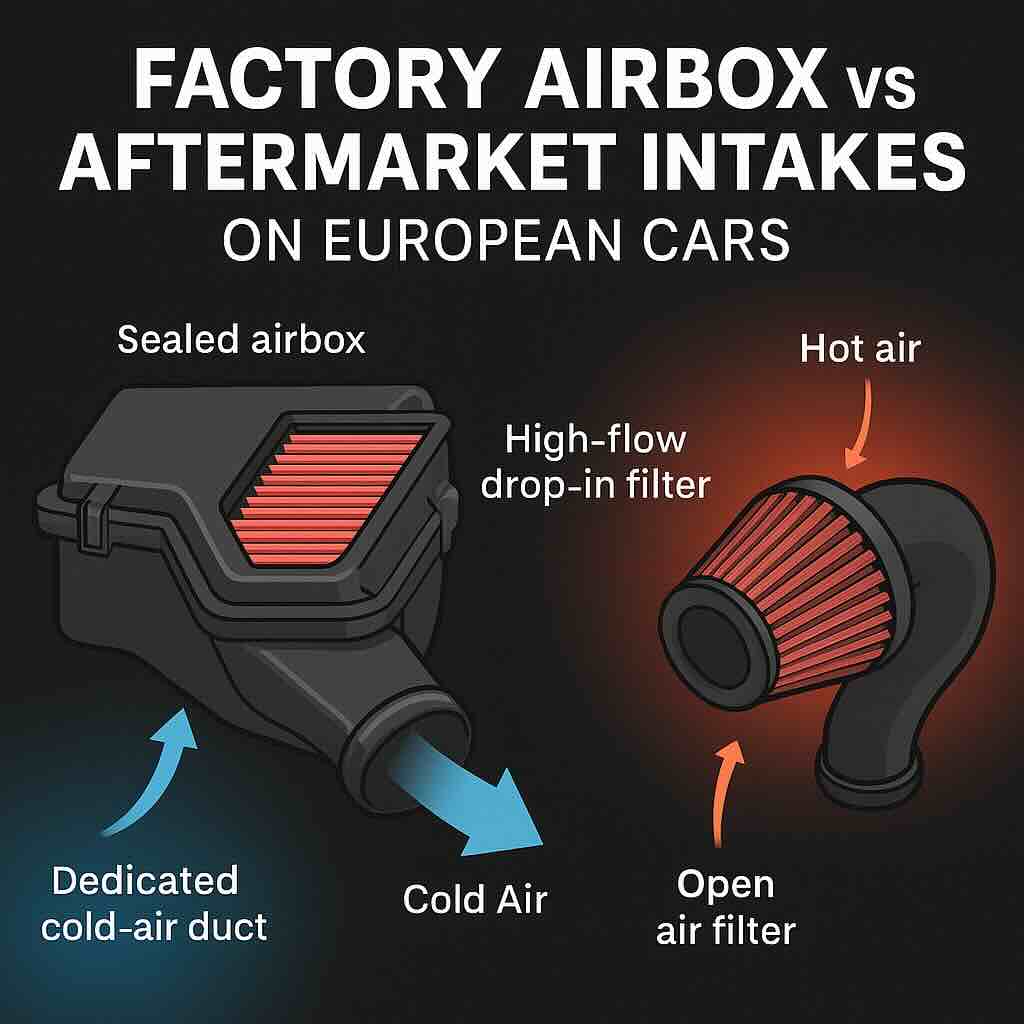
Internal combustion engines breathe air. Every intake stroke, the engine must overcome restriction in the intake tract—whether from the ducting, bends, or air filter itself. The harder the engine has to work to draw in air, the more pumping losses it incurs. These losses cost fuel.
A performance drop-in filter with a high-flow oiled cotton element like BMC’s reduces restriction compared to a stock paper filter—especially as that paper filter loads with debris over time. This can reduce intake pressure drop and improve engine efficiency, especially during:
- Highway cruising with light throttle input
- Part-throttle acceleration in city or backroad driving
- Climbs and load conditions where turbo boost is active but airflow still matters

How Much Fuel Economy Gain Is Realistic?
Gains are modest but real in controlled conditions. Based on logged data and independent testing:
- 0.2 to 0.6 MPG increase is typical on highway cruise for a modern 6-cylinder turbo engine.
- Gains are often more noticeable at higher altitudes or in warm weather, where airflow restriction becomes more relevant.
- City MPG usually stays about the same, but throttle response may feel more direct at light input.
It is not a magic fuel-saving device—but over 10,000 to 20,000 miles, the cumulative fuel savings can help offset the cost of the filter itself. And since BMC filters are reusable, the benefit keeps stacking instead of resetting every time you throw away a paper element.
Why Restriction Matters for MPG
Fuel economy is not just about combustion efficiency. It is also about how much work the engine has to do to move air. When intake restriction increases, pumping losses go up. On modern engines—especially turbocharged ones—that can slightly increase the effort needed to achieve the same real-world load.
A less restrictive drop-in filter helps support:
- Lower intake pressure drop
- More stable airflow under steady-state load
- Slightly improved efficiency during cruise and moderate acceleration
None of that means massive MPG gains. It means the engine wastes a little less effort pulling air through the intake system, which is exactly where small efficiency gains come from.
Other Indirect MPG Benefits
- Cleaner airflow can help reduce soot buildup on MAF sensors and turbo compressor wheels.
- Improved throttle response can help some drivers use less pedal to achieve the same acceleration.
- Lower restriction under load can slightly improve turbocharger efficiency, reducing fuel burn at moderate boost.
Which Cars See the Most Benefit?
Gains are most noticeable on:
- Turbocharged 4- and 6-cylinder engines like BMW B48, B58, S55, VW/Audi EA888, EA839, and Mercedes-AMG M177 platforms
- Vehicles with factory paper filters that load up quickly
- Cars kept long-term where reusability matters financially
While a BMC filter will not transform a car’s MPG overnight, it supports better long-term efficiency and cleaner airflow as part of a broader maintenance and performance strategy.
Long-Term Ownership Math
This is where reusable filters make more sense than people sometimes realize. Even if the MPG gain is small, the filter can still pay off in two ways:
- You reduce recurring replacement costs compared to buying new paper filters over and over
- You may see small but repeatable fuel savings over high annual mileage
That makes a reusable drop-in filter attractive for daily-driven European cars where owners care about both performance and ownership cost.
Summary: MPG Gains You Can Actually Believe
- BMC drop-in filters reduce pumping losses and airflow restriction.
- Highway MPG increases of roughly 1–3% are realistic under the right conditions.
- The reusable design makes long-term ownership more economical and less wasteful.
Upgrade your air filter once—and keep the benefit working for years instead of one service interval.
Shop BMC Filters or grab a cleaning kit to extend the life of your investment.
FAQ
Can a BMC drop-in filter really improve fuel economy?
Yes, but the gains are usually modest. A less restrictive reusable filter can reduce intake pressure drop and pumping losses, which may slightly improve MPG in steady-state highway driving and light-load conditions.
How much MPG improvement is realistic?
On many modern turbocharged European vehicles, a realistic gain is around 0.2 to 0.6 MPG under controlled highway conditions. That usually works out to about a 1–3% improvement rather than a dramatic change.
Do BMC filters improve city MPG too?
Usually not by much. Stop-and-go traffic, throttle input, idling, and driving style dominate city fuel economy. Highway and steady-load driving are where small airflow-efficiency gains are more likely to show up.
Why do turbocharged engines often see more benefit?
Turbocharged engines are more sensitive to intake restriction because airflow demand changes across a wide operating range. Reducing restriction can slightly improve efficiency and response, especially under moderate load and cruise conditions.
Is the reusable design part of the value?
Absolutely. Even if the MPG gain is small, a reusable BMC filter can save money over time by replacing multiple disposable paper filters, which improves the long-term ownership math.

Leave a comment
This site is protected by hCaptcha and the hCaptcha Privacy Policy and Terms of Service apply.